

I don’t often like to extrapolate trends in a straight line but extrapolating these trends to their logical conclusion basically gets America to a single-payer system in the least efficient way possible, and it’s not clear how that stops.[1]
Trend 1: Health insurance premiums are climbing precipitously
No matter how you measure it, premiums are up more than 50% in a decade.
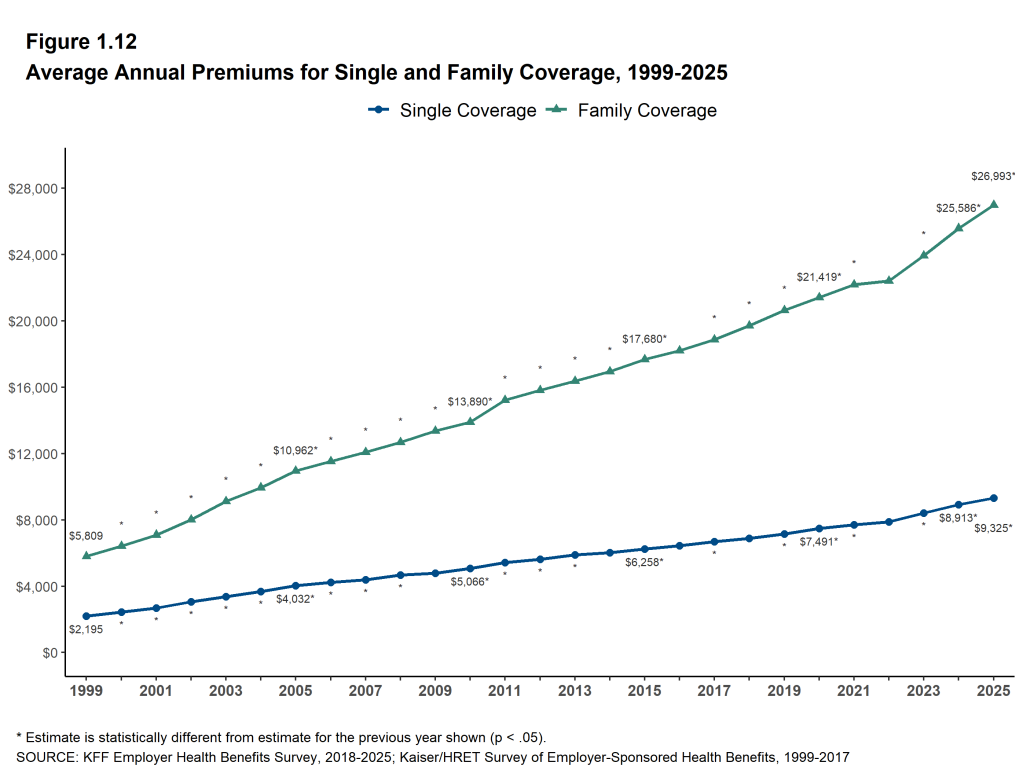
Source: KFF 2025 Employer Health Benefits Survey
Employers expect 2027 to outpace inflation again, and bring the largest cost increase since 2003 - around 8%. Insurers expect between 10% and 15%.
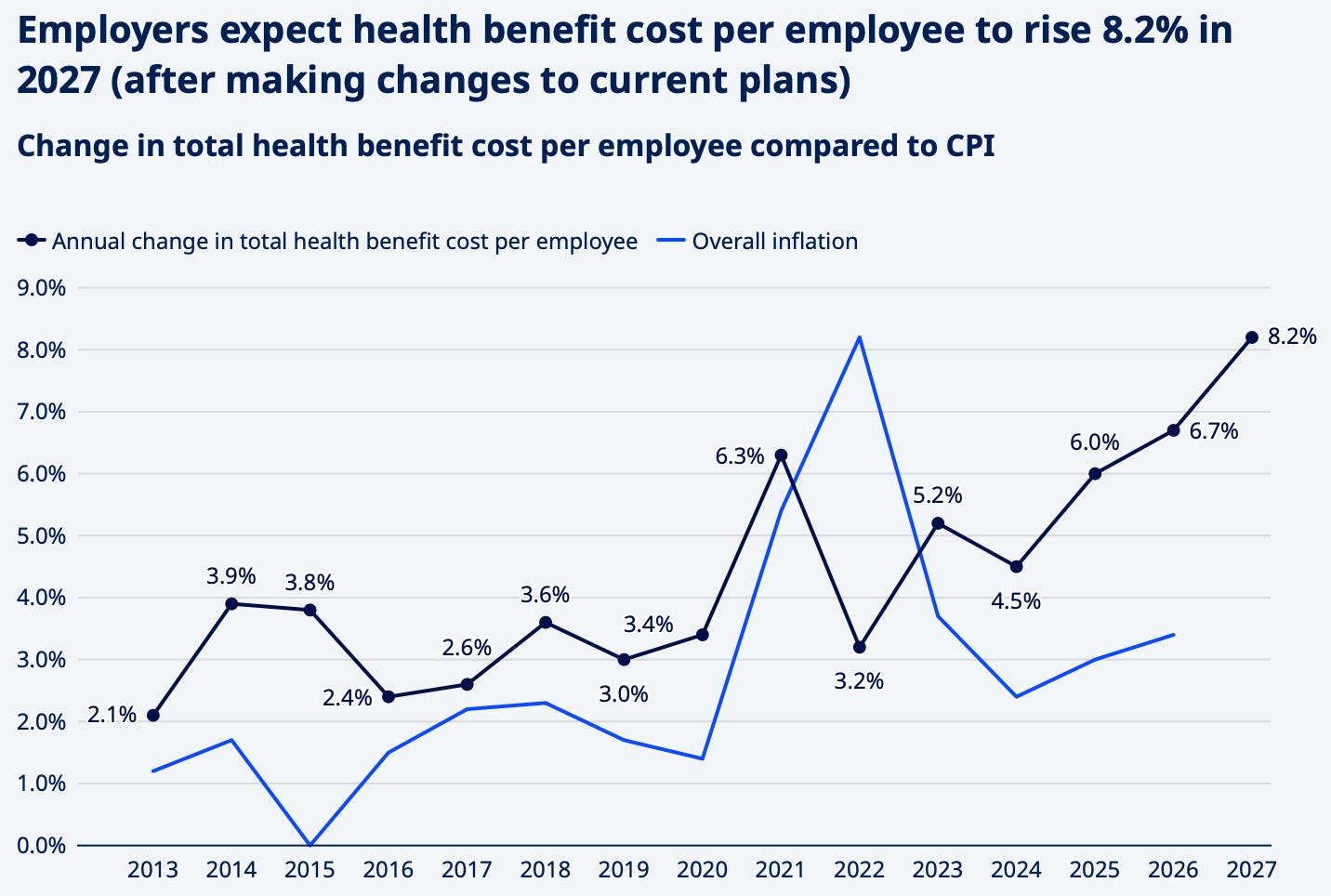
Source: Mercer: health benefit costs expected to jump 8.2% in 2027
Trend 2: ACA coverage is shrinking, and many are becoming uninsured
With enhanced subsidies gone, Marketplace enrollment fell for the first time in seven years, and about one in ten 2025 enrollees is now uninsured.
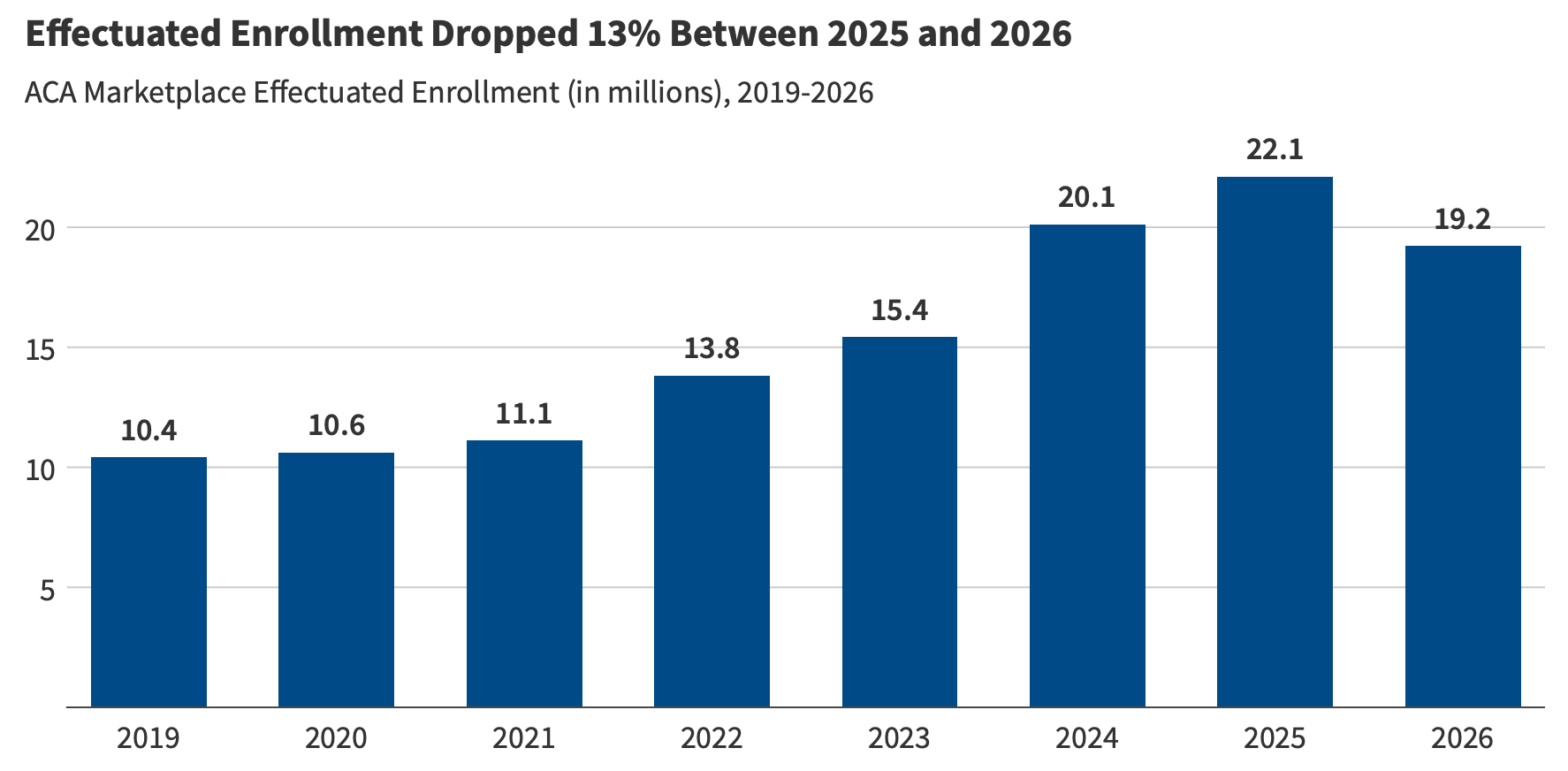
Source: KFF: enrollment down 3 million · KFF: 2026 projection
Trend 3: Medicaid funding cuts
CBO projects the reconciliation law will leave 10 million more people uninsured by 2034, with the steepest increase arriving in 2027.
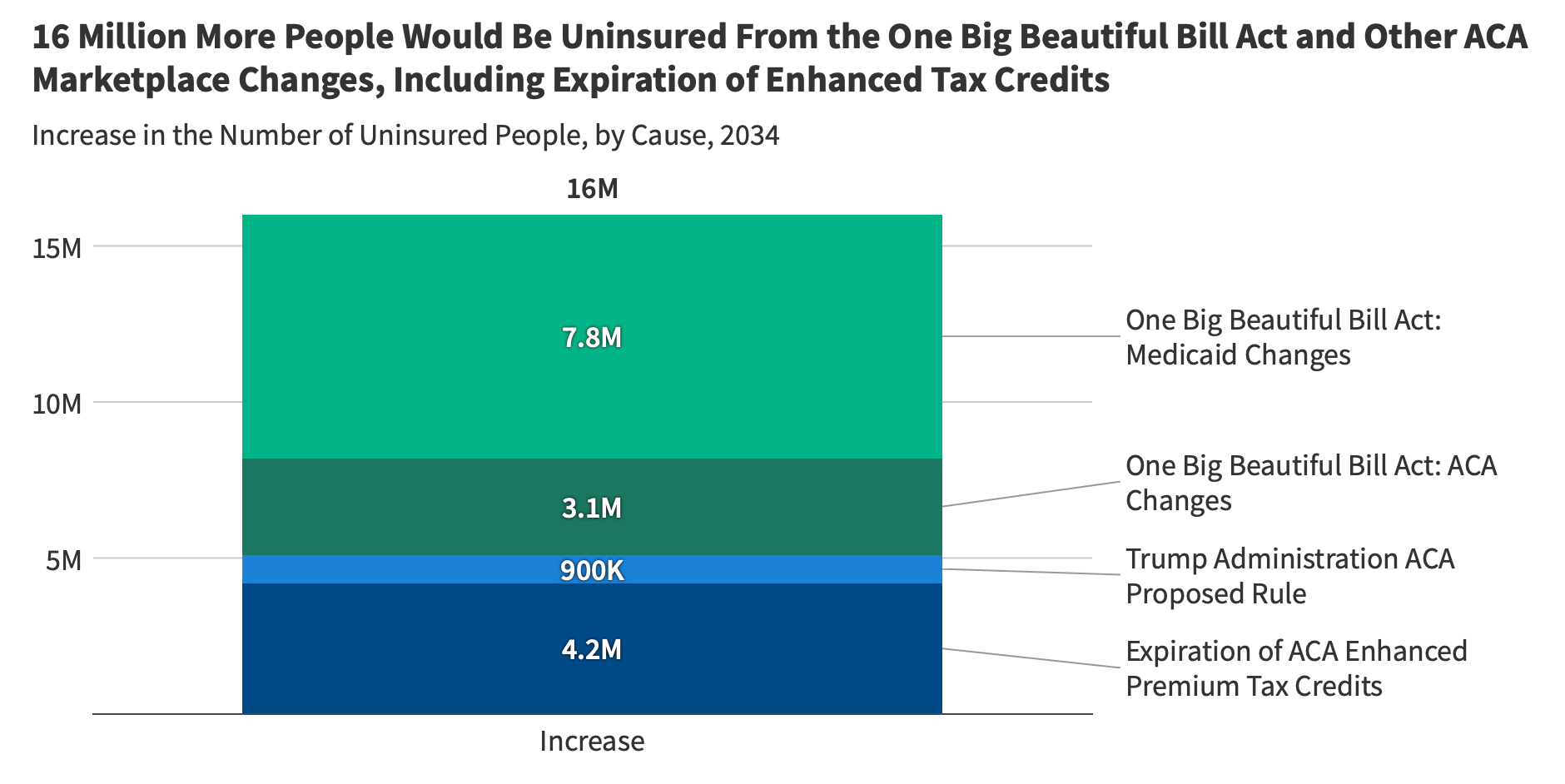
Source: KFF: effect on the uninsured by state · KFF: 16 million more uninsured
This is driving self pay rates vertical
Anecdotally, health systems are already seeing self pay rates rise, especially for unscheduled, emergency department visits. For example Community Health Systems’ self-pay share of visits was up 20% in a single year. In the words of CEO Kevin Hammonds:
“In terms of collectibility of self-pay, we only collect a few pennies on the dollar anyway, so there’s no real room to get much worse on that. We’re effectively not recognizing any revenue on that self-pay business.”
Source: CHS Form 10-Q, Q1 2026 · CHS Q2 2026 earnings call
Trend 4: Hospital margins are falling
The median health system margin dipped below breakeven at the start of 2026, and Fitch sees the sector splitting, with the bottom 15% deteriorating.
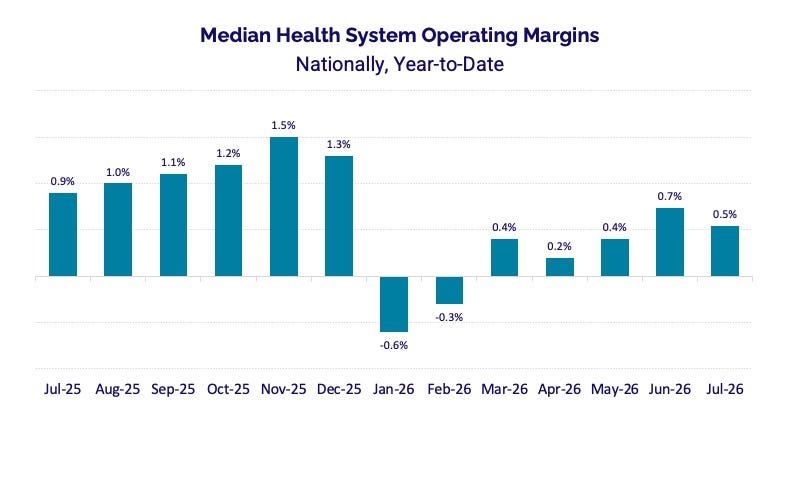
Combined with rising interest rates impacting hospital bonds, bond repayments and capital projects will suffer.
Sources: HFMA: hospital margins decline in 2026 · Kaufman Hall: hospitals begin 2026 challenged
Trend 5: Inflation is spiking the cost of labor and non labor expenses beyond any reimbursement
In 2025, labor costs rose 5.6%. For FY2027, the Medicare payment update is only 2.3%.
Bringing it all together
As more patients become uninsured or under insured, they’re more likely to rely on the Emergency Department as primary care, and be sicker when they do
Hospitals will lose more and more money. Some will go bankrupt.
To maintain access, they will need to be rescued. This will likely be by the taxpayer, whether state, regional, federal, or a mix.
The taxpayer will effectively be paying for care at that point, which is . . . single payer.
We’ll get to single payer the least efficient way possible: commercial payers exit unprofitable markets while we restrict more safety nets. As a result, more patients are left uninsured or underinsured. This puts pressure on more sites of care, which close until governments rescue them to preserve access in their communities. Those governments become the backstop for a growing uninsured population using emergency rooms as primary care and only showing up when really sick.
I think we’re there in 5–7 years.
—
[1] Trends like these will elicit responses across policy, technology, culture and more, so it’s unlikely that they continue as I’ve described here. But it’s unlikely, given our information environment, that those responses are sufficient to stem the tide.
Grim tidings. But tough to argue
> "Trends like these will elicit responses across policy, technology, culture and more, so it’s unlikely that they continue as I’ve described here. But it’s unlikely, given our information environment, that those responses are sufficient to stem the tide."
We're already seeing the rise of self-pay subscription marketplaces for labs, imaging, and medications (Function/Superpower, Costplus Drugs, etc).
Could imagine this subscription model extending to routine primary care with some degree of AI-powered automation, while traditional insurance is redesigned strictly to cover unpredictable, high-cost major medical events.
I agree the transition will be messy, but I'm curious why you think it's not sufficient?